
How Often Should I Flush My Water Heater?

By Tom Darling
Owner · City of Albany Master Plumber · Lic. #PLBG21-147
Updated
Flush a tank water heater about once a year. Hard or sediment-heavy water, including some well water, may call for a flush every six months, and a tankless unit should be descaled on the schedule in its manual. Flushing clears the sediment that builds up in a tank and is the core of routine water heater maintenance.
How Often Should You Flush a Water Heater?
For most homes, draining and flushing the tank once a year is a good rule of thumb. An annual flush clears out the sediment that settles at the bottom of the tank, which helps the unit heat water efficiently and run quietly.
That said, the right timing depends on your situation:
- Hard or mineral-heavy water: Consider flushing every six months, since minerals build up faster.
- Well water: Many homes around the Capital Region run on wells, which can carry more sediment. More frequent flushing may help.
- Newer tanks with softened water: Once a year is usually plenty.
- Tankless units: These should be descaled on the schedule the manufacturer recommends, often annually.
Maintenance and flushing are a regular part of our work: about one in six of the 1,197 water heater jobs in our records from October 2021 to October 2026 (193) were maintenance or flush work, by our job-note sort.
Why Flushing Matters
Over time, sand, grit, and mineral deposits collect at the bottom of a tank-style water heater. As that layer grows, the burner or heating element has to work harder to push heat through it. The result is a unit that uses more energy, recovers hot water more slowly, and wears out sooner than it should.
Regular flushing helps you avoid that buildup. It keeps efficiency up, reduces strange noises, and gives the tank a better shot at reaching its full service life.
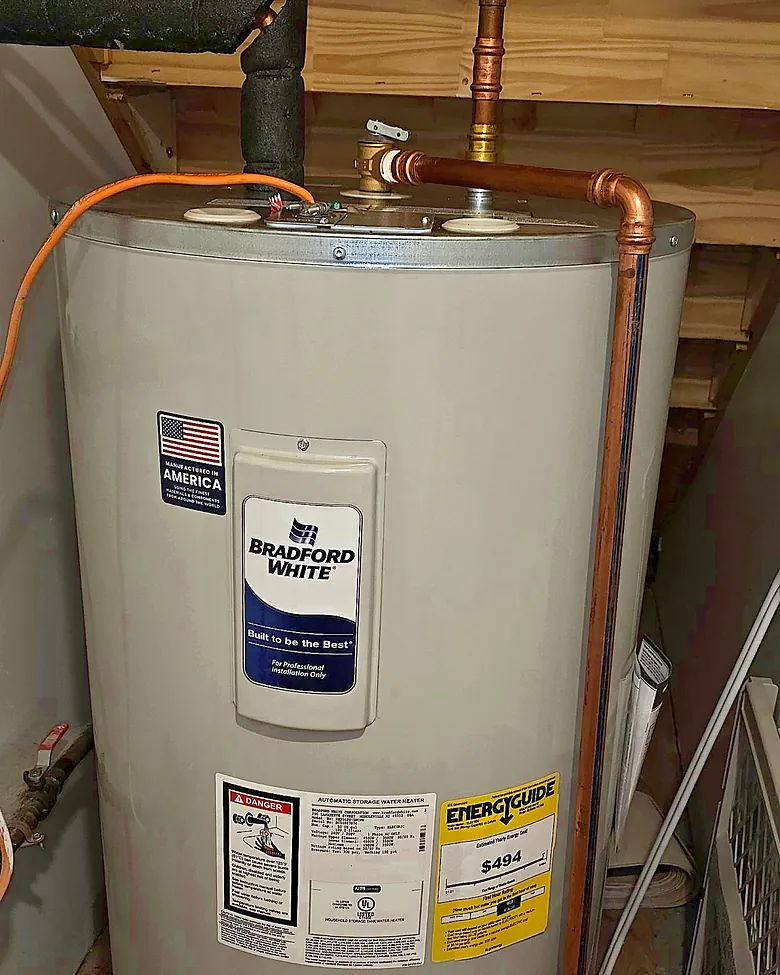
Signs Your Water Heater Needs a Flush
Even if you are not on a strict schedule, your water heater will often tell you when it is overdue. Watch for:
- Rumbling, popping, or knocking sounds when the unit heats up
- Hot water that runs out faster than it used to
- Cloudy or rusty-looking hot water
- Longer wait times to get hot water back after heavy use
- Higher energy bills with no other clear cause
Any of these can point to sediment that has built up inside the tank.
Can You Flush It Yourself?
Some homeowners are comfortable doing a basic flush: shutting off power or gas, connecting a garden hose to the drain valve, and letting the tank empty into a safe spot. If you go this route, follow your unit’s manual carefully and never work on a tank that is still hot or pressurized.
How to flush a water heater, step by step
If you do it yourself, follow your manual first. These are the usual steps for a tank heater:
- Let the water cool if the heater has been running; hot water can scald.
- Turn off the power at the breaker for an electric unit, or set a gas unit’s control to its pilot or off position as the label directs.
- Close the cold-water supply valve to the heater.
- Open a hot-water faucet somewhere in the house so air can enter the system.
- Attach a garden hose to the drain valve near the bottom of the tank and run it to a floor drain or outside, downhill from the tank.
- Open the drain valve and let the tank empty. Sediment can slow or clog the flow; do not force a stuck or plastic valve.
- To rinse, briefly open the cold-water supply with the drain still open until the water runs clear.
- Close the drain valve, remove the hose, and refill the tank with the hot faucet still open until water runs steadily without air.
- Turn the power or gas back on only after the tank is full. An electric unit’s elements can burn out if they are energized in an empty tank.
If you would rather not deal with it, if the drain valve is stuck, or if the water comes out heavily discolored, it is worth bringing in a professional. A plumber can flush the tank, check the anode rod, inspect the valves, and flag any early problems before they turn into a leak or failure.
How Empire State Plumbing Can Help
We handle water heater flushes, maintenance, repairs and full replacements, and we can set you up on a schedule that fits your water and your home. We are licensed in the City of Albany (#PLBG21-147), and financing is available through Acorn Finance if a larger repair or replacement is in the cards. See our maintenance plan and water heater repair.
Ready to get your water heater flushed, or have a question about how often you should do it? Call Empire State Plumbing at (518) 482-4205 or book online. We offer same-day service within business hours when the schedule allows.
Questions homeowners ask
Yes, though it is a different process. A tankless unit is descaled by circulating a cleaning solution through the heat exchanger. See tankless water heater repair for what a flush involves.
Sediment keeps building on the bottom of the tank. The burner or element has to work through that layer, the unit gets noisier and slower to recover, and it wears out sooner. A layer that hardens over the years may not flush out at all, which is why starting early matters.
Not always, but sediment that has hardened may not come out, and a neglected drain valve can clog or leak when it is opened. If the unit is old and has never been flushed, have a plumber look at it before you force the valve.
Softened water leaves less scale, so a yearly flush is usually plenty, but sediment and sand can still settle. Keep to the schedule in your manual and have the anode rod checked, because softened water can change how fast the rod wears.
No. Turn off the power, or set the gas control to pilot or off, before you start. Running a burner or an element while the tank drains can damage the unit, and the water can scald. Follow the steps above and your manual.
Related services
Call Monday–Friday, 7:30am–6pm, or book online any time.
From the blog
Keep reading
Tankless vs traditional water heater in Albany: how to choose
Tankless vs traditional water heater in Albany, NY: four checks on your own home (demand, gas line and venting, space, water) show which one fits.
Keep readingHire a licensed plumber: what you can DIY and what to leave to a pro
Hire a licensed plumber or DIY it? Which plumbing jobs are safe to do yourself, which to leave to a pro, and how to check a plumber’s license.
Keep readingWater heater services in the Capital Region: which one do you need?
Water heater services for Capital Region homes explained: when to repair, replace, go tankless or maintain a water heater, and what each covers.
Keep reading
Need a hand from a local pro?
Empire State Plumbing has served Capital Region homeowners since 2006 — licensed (City of Albany #PLBG21-147) and insured. Call Monday–Friday, 7:30am–6pm, or book online any time.
Real homeowners
What Capital Region homeowners say
Verified Google reviews from Capital Region homeowners.
