How Does a Water Softener Work? What It Does and Whether You Need One

A water softener removes the hardness minerals, mainly calcium and magnesium, from your water by ion exchange, so you get less scale on fixtures, fewer spots on dishes and less buildup in your water heater. You probably need one if you see chalky scale, soap that will not lather and stiff laundry, and a hardness test confirms it.
Hard water is a fact of life for a lot of Capital Region NY homes, and it shows up in ways most people never connect to their water: spotty dishes, dry skin, and water heaters that wear out early. This guide walks through what a water softener actually does, the signs you might need one, and how to keep it running well.
What Hard Water Is and Why It Matters
Hard water simply means your water carries a higher level of dissolved minerals, mostly calcium and magnesium. Those minerals are not harmful to drink, but they build up over time and quietly cause problems throughout your plumbing and appliances.
- Chalky white scale on faucets, showerheads, and fixtures
- Soap and shampoo that never quite lather, plus stiff laundry
- Cloudy spots on glassware and dishes straight out of the dishwasher
- Reduced efficiency and shorter lifespan for water heaters and appliances
- Dry, itchy skin and dull-feeling hair after a shower
How a Water Softener Works
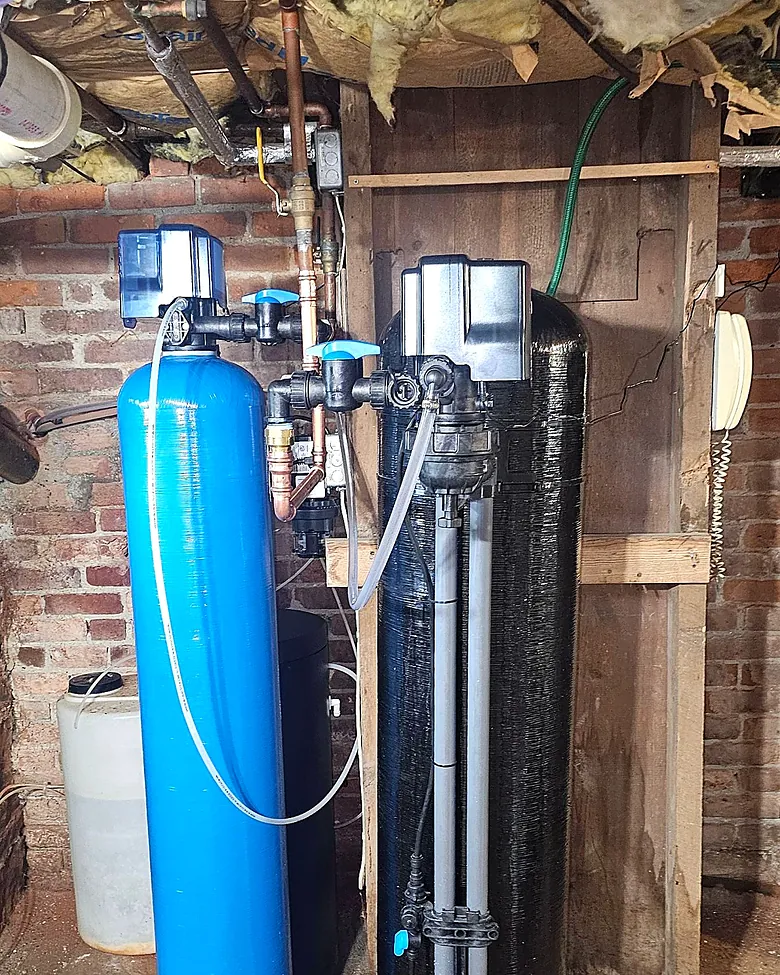
A traditional water softener uses a process called ion exchange. Water flows through a tank filled with resin beads that hold sodium ions. As the hard water passes through, the calcium and magnesium swap places with the sodium, and the softened water continues on to your taps and appliances.
Once the resin fills up with minerals, the unit runs a regeneration cycle. It flushes the resin with a salt brine drawn from a separate tank, washes the captured minerals down the drain, and recharges the beads so the system is ready to keep working. Most modern units handle this automatically on a schedule or based on your actual water use.
Signs Your Home Could Benefit From One
You do not need a lab report to suspect hard water, though testing confirms it. If several of these sound familiar, a softener is worth a conversation.
- Frequent scale buildup that returns no matter how often you clean
- Soap scum rings in tubs and sinks
- A water heater that seems to lose efficiency faster than it should
- Plumbing fixtures and appliances that need replacing more often than expected
- Skin and hair that always feel dry, even with the right products
Do I need a water softener? Start with a test
Look for the signs above, then measure the hardness. A hardness test strip gives a quick read, and a lab or a plumber’s test gives a reading in grains per gallon, which is what sizes a softener. If the water is only slightly hard, you may be fine without one. If you also have iron, sulfur, sediment or taste problems, a softener alone will not fix them, and water softener vs water filter explains how to match the equipment to the problem.
Salt-based softener vs salt-free conditioner
A salt-based softener removes hardness minerals through ion exchange, which is the process described above. A salt-free system, often called a conditioner, does not remove those minerals from the water. It is sold to change how scale forms, and results vary, so ask what the unit is tested to do before you choose one.
Is softened water safe to drink?
A softener swaps hardness minerals for sodium or potassium, so softened water contains a small amount more of one of them. It is not a purifier and does not treat bacteria or other contaminants. If someone in the home is on a sodium-restricted diet, ask their doctor, and keep a separate tap for drinking if advised.
Choosing the Right System for Your Home
The right softener depends on how hard your water is and how much water your household uses. A unit that is too small regenerates constantly and wears out early, while an oversized one is money you did not need to spend. A few things shape the decision:
- Your measured water hardness level
- Household size and daily water demand
- Whether you have well water, which often needs a closer look at what else is in the supply
- Available space for the tanks near your main water line
- Salt-based versus salt-free approaches, each with its own tradeoffs
Because so many Capital Region homes run on well and septic systems, it often makes sense to evaluate softening alongside any other water treatment, so the whole setup works together.
Installation and Maintenance Basics
A water softener ties into your main water line, usually where it enters the home, so the whole house benefits. Proper installation matters: bypass valves, drain connections, and correct sizing all affect how well the system performs over the years.
Upkeep is straightforward once it is in. Keep the brine tank stocked with the right salt, check the salt level periodically, and have the system looked over now and then to confirm it is regenerating properly and the resin is in good shape. Done right, a softener quietly protects your plumbing and appliances for a long time.
Where to go next
For installation, sizing and repair of an existing unit, see water softener installation and repair. If your water also has taste, odor, sediment or iron problems, see whole-house water filtration and the water treatment overview. For the contaminants a softener does not touch, read water contaminants in tap and well water.
Empire State Plumbing is a family-run team serving the Capital Region since 2006, and we are happy to help you sort out whether a water softener is right for your home. Call us at (518) 482-4205 or book online to set up a visit.
Good to know
Questions homeowners ask

A test is the most useful first step. It shows how hard the water is and whether iron or other minerals need handling first. See the well water treatment guide, then water softener installation.
It removes the calcium and magnesium that make water hard, so you get less scale on faucets and in your water heater, fewer spots on dishes and soap that lathers better. It does not filter drinking water or remove most other contaminants.
Inside the tank, resin beads hold sodium. As hard water passes through, calcium and magnesium cling to the beads and sodium is released into the water. Once the beads are loaded, a regeneration cycle flushes them with brine and rinses the minerals to the drain.
Chalky scale, spotted dishes, stiff laundry and soap that will not lather point to hard water, and a hardness test confirms it. If the water is only mildly hard you may not need one. Other problems like iron or sulfur need different treatment.
The cycle length varies by model, and the manual lists it. Most units are set to regenerate when the household is not using water, and some regenerate based on how much water has been used instead of on a fixed schedule.
Check the brine tank on a regular schedule and top it up so it never runs empty. How fast it is used depends on your water hardness and how much water the household uses, so there is no one interval for every home.
They do different things. A salt-based softener removes hardness minerals by ion exchange. A salt-free conditioner does not remove them, so results vary. Ask what a salt-free unit is tested to do before choosing it.
Installing one means tying into the main water line, setting a bypass valve, a drain connection, the brine line and sizing the unit to your hardness and water use. A mistake can mean poor softening or a leak, so most people have a plumber do it. See water softener installation and repair.
From the blog
Keep reading
Water softener vs. water filter: which problem is yours?
Water softener vs water filter: what each one removes, how to match scale, taste, odor, iron or sulfur to the right treatment, and when a home needs both.
Read articleWater contaminants in tap and well water: signs, testing and fixes
Water contaminants in tap and well water: hardness, iron, sulfur, sediment and bacteria. How to spot the signs, test the water and match a fix.
Read articleLow water pressure: causes and how to fix it
Low water pressure causes, from clogged aerators and valves to a bad regulator, a leak or a well pump, with simple checks and when to call a plumber.
Read article
Real homeowners
What Capital Region homeowners say
Verified Google reviews from Capital Region homeowners.

Call or book online
Need a hand from a local pro?
Empire State Plumbing has served Capital Region homeowners since 2006 — licensed (City of Albany #PLBG21-147) and insured. Call Monday–Friday, 7:30am–6pm, or book online any time.
Book online
Book your service online, same day
Tell us what is going on and when works for you. A real Empire State Plumbing dispatcher confirms your same-day or next-available slot during business hours.
- Same-day serviceOpen slots across all 6 counties
- Upfront, flat pricingApproved before any work starts
- Licensed & insuredBackground-checked, every time

Request your booking
Takes about 60 seconds
We use your information to respond to your request and for measurement or advertising as described in our Privacy Policy. For a same-day emergency, calling is fastest.