Your Top 7 Hot Water Heater Questions Answered

By Tom Darling
Owner · City of Albany Master Plumber · Lic. #PLBG21-147
Updated
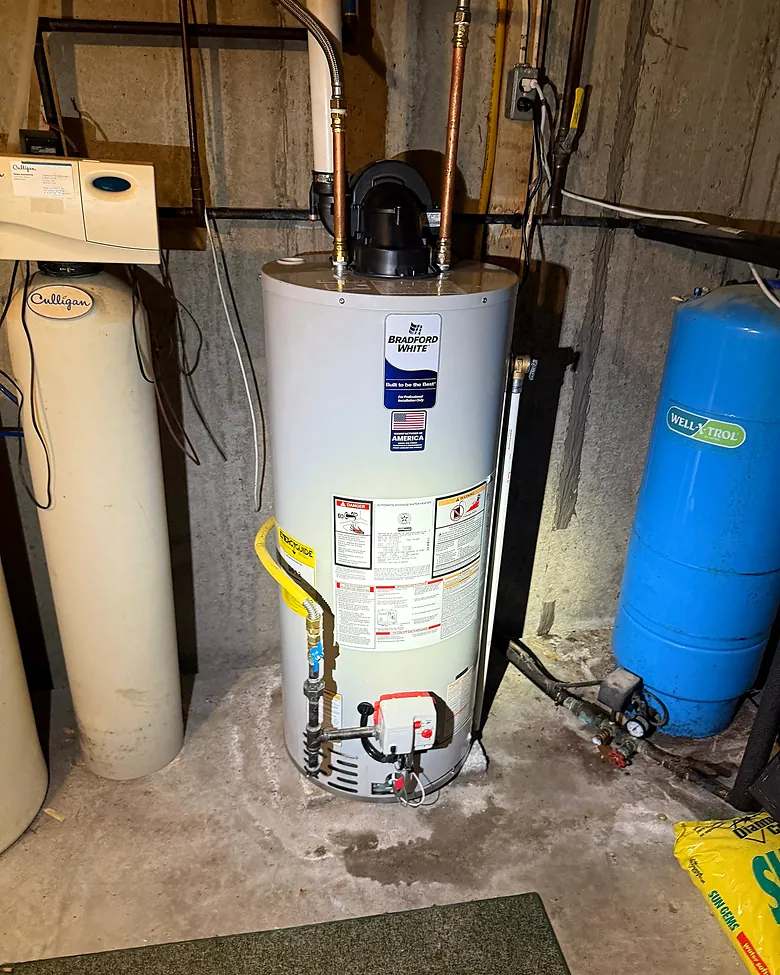
This water heater FAQ gives short answers first: a tank water heater often lasts 8 to 12 years, tank or tankless depends on your home, 120 degrees Fahrenheit is the usual setting, running out of hot water points to sediment, a failing element or burner, or a unit that is too small, a leak needs attention right away, gas or electric depends on the fuel at your house, and a newer unit with one failed part is usually worth repairing.
Water heaters turn up in about 1 in 9 of the jobs in our own records (1,197 of 11,150 completed jobs, October 2021 to October 2026), so these seven questions come up often.
1. How Long Does a Hot Water Heater Last?
A typical tank water heater lasts somewhere in the range of 8 to 12 years, while a well-maintained tankless unit can run longer. Lifespan depends a lot on water quality, how hard the unit works, and whether it gets routine care.
- Annual maintenance, like flushing sediment from a tank, helps you reach the upper end of that range.
- Once a unit is past the decade mark, it’s smart to start planning ahead rather than waiting for a failure.
More on hot water tank lifespan and what shortens it: why water heaters fail and the signs you need a new water heater.
2. Should I Get a Tank or Tankless Water Heater?
Both are good options, and the right one depends on your home and how your household uses hot water. Tank units cost less upfront and are simpler to install. Tankless units heat water on demand, take up less space, and can be a great fit for homes that want endless hot water.
- Tank: lower upfront cost, simpler swap, stores a set amount of hot water.
- Tankless: heats only as needed, frees up space, and tends to last longer.
More on this: standard vs tankless water heater and tankless vs traditional water heater in Albany.
3. What Temperature Should I Set My Water Heater To?
For most homes, 120 degrees Fahrenheit is the sweet spot. It’s hot enough for comfortable showers and cleaning, but low enough to reduce scald risk and slow mineral buildup inside the tank.
If you have young kids or older adults in the house, 120 degrees is especially worth sticking to. Setting it much higher mostly just wastes energy and raises the risk of burns.
More on this: water heater efficiency tips.
4. Why Does My Hot Water Run Out So Fast?
Running short on hot water is one of the most common complaints we hear, and it usually comes down to one of a few causes.
- Sediment buildup in the bottom of the tank, which shrinks the usable hot-water capacity.
- A failing heating element or burner that can’t keep up.
- A tank that’s simply too small for how your household has grown.
If a flush and a quick inspection don’t fix it, it may be a sign the unit is near the end of its life or undersized for your needs.
More on this: how often to flush a water heater.
5. Is a Leaking Water Heater an Emergency?
A leak should never be ignored. A small drip can turn into a burst tank, and a burst tank can dump dozens of gallons of water onto your floor in minutes.
- If you see active leaking, shut off the water supply to the unit and turn off the power or gas.
- Then call us right away so we can assess it before it causes bigger damage.
We offer same-day service within business hours when the schedule allows, so you do not have to live with a leak hanging over you. More on this: how to tell if your water heater is leaking.
6. Is a Gas or Electric Water Heater Better?
Neither is universally better. The right choice usually comes down to what fuel already runs to your home and how much hot water you use.
- Gas units heat and recover faster, which suits larger or busier households, and they keep working during a power outage.
- Electric units are simpler to install with no venting required and fit into a wider range of spaces.
If your home already has gas, oil, or propane for heating, a fuel-fired unit is often the natural fit. We can walk you through what your setup supports.
More on this: gas vs electric water heater.
7. When Should I Repair Instead of Replace?
A good rule of thumb is to weigh the unit’s age against the cost of the fix. A newer water heater with a minor issue is usually worth repairing. An older one with a major problem is often better replaced.
- Repair: the unit is under 8 years old and the problem is isolated, like a thermostat or valve.
- Replace: the unit is past a decade, leaking from the tank, or has repeated issues.
If you’re not sure which way to go, we’ll give you a straight recommendation based on what we actually see, not a sales pitch.
More on this: water heater repair and water heater replacement and installation.
Still have a water heater question, or ready to get one handled? Call Empire State Plumbing at (518) 482-4205 or book online. Financing is available through Acorn Finance.
Questions homeowners ask
No hot water, hot water that runs out fast, rumbling or popping noises, rusty water and leaks are the usual complaints. Each has a short list of likely causes, from a tripped breaker or a pilot that is out to sediment, a worn element or a failed tank. The answers above and the linked guides take them one at a time.
Check the simple things first: the breaker on an electric heater, or the gas valve and pilot on a gas heater. If those are fine, the cause is often inside the unit, such as an element, a thermostat, a thermocouple or a control, and it needs a diagnosis. See water heater repair.
That noise is normally a sediment layer on the tank floor with water boiling beneath it. A flush often quiets it; if it carries on or the tank is old, have a plumber look. See how often to flush a water heater.
Plan on a yearly flush and a check of the anode rod and relief valve, and more often with hard or well water. Our maintenance plan sets up yearly visits.
Look for rusty hot water, hot water that runs out early, loud rumbling or a damp base. The signs you need a new water heater explain what each one means and when repair is enough.
Related services
Call Monday–Friday, 7:30am–6pm, or book online any time.
From the blog
Keep reading
Pipe is frozen? What to do when your pipes freeze
Pipe frozen? Shut off the main, thaw it safely and know when to call a plumber. What to do when pipes freeze or burst, and how to prevent it.
Keep readingWater contaminants in tap and well water: signs, testing and fixes
Water contaminants in tap and well water: hardness, iron, sulfur, sediment and bacteria. How to spot the signs, test the water and match a fix.
Keep readingStandard vs tankless water heater: pros and cons for Capital Region homes
Standard vs tankless water heater: compare price, hot water supply, space, efficiency, service life and installation to see which fits your home.
Keep reading
Need a hand from a local pro?
Empire State Plumbing has served Capital Region homeowners since 2006 — licensed (City of Albany #PLBG21-147) and insured. Call Monday–Friday, 7:30am–6pm, or book online any time.
Real homeowners
What Capital Region homeowners say
Verified Google reviews from Capital Region homeowners.
