Most furnace replacements in the Capital Region cost $4,600 to $7,500 installed, and most boiler replacements run $9,000 to $16,000. Replacing a furnace and central air together as a matched system has run $13,000 to $19,000 on our recent jobs. These are real numbers from Empire State Plumbing invoices over the past 14 months — not national averages, which consistently understate what Northeast winters, older housing stock, and New York code actually require. Here’s what drives the price and how to tell when replacement beats another repair.
What Heating Replacement Costs Here
- Furnace replacement (gas, forced air): $4,600–$7,500 installed.
- Boiler replacement (gas, hot water): $9,000–$16,000 installed.
- Furnace + central AC as one matched system: $13,000–$19,000.
Every job is quoted flat and in full before work starts — equipment, labor, venting, code items, and permits.
What Moves the Number
- Efficiency tier. A standard-efficiency furnace is the base of the range; a 96%+ condensing unit costs more up front and vents differently (PVC out the side wall instead of the chimney), but burns meaningfully less fuel every Capital Region winter.
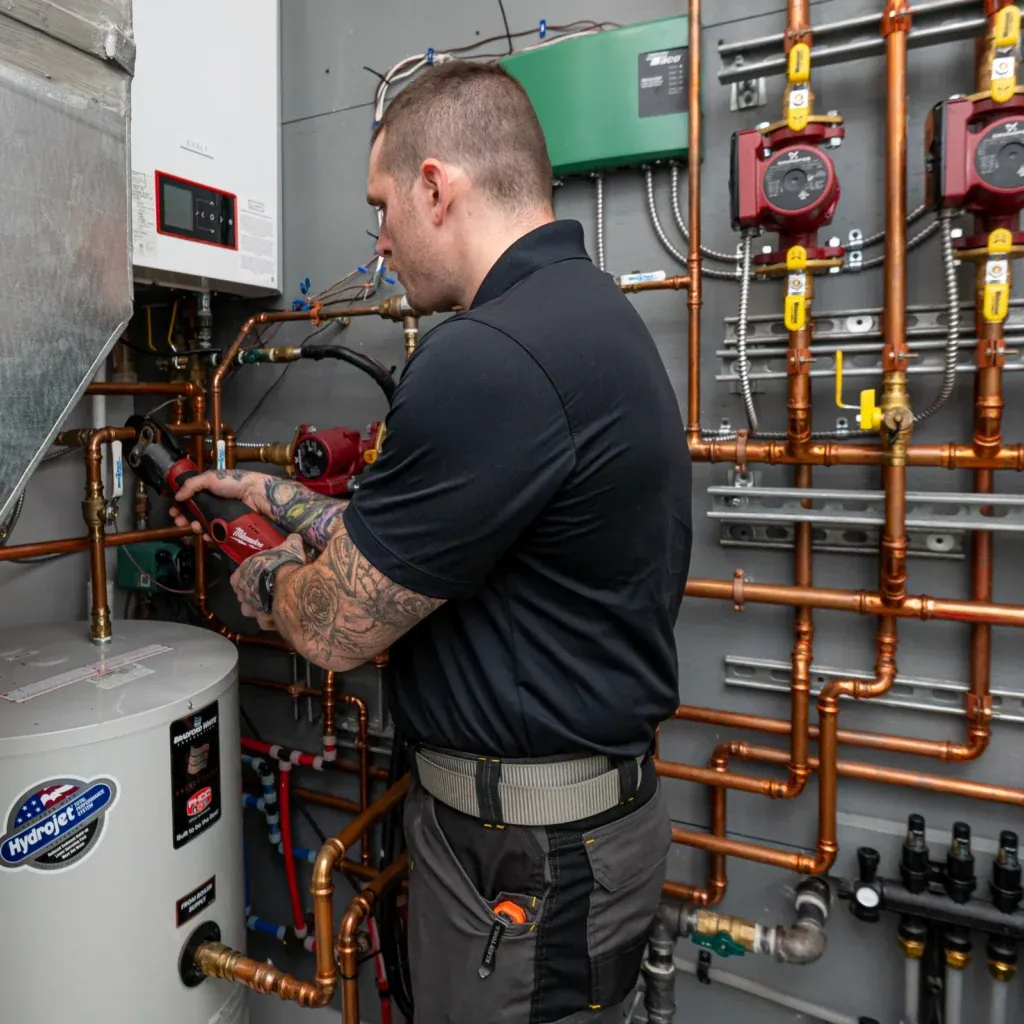
- Boiler complexity. Boilers carry more field labor than furnaces: near-boiler piping, circulators, zone valves, and often an indirect water heater. That’s most of why the boiler range starts where the furnace range ends.
- Venting and chimney work. Orphaning an old chimney (or lining it) when equipment changes is a code item that surprises people — it’s real money and it’s non-optional.
- Fuel conversions. Moving from oil to gas or propane — common in Nassau, Schodack, and East Greenbush where oil heat still dominates — adds gas piping, tank decommissioning, and venting beyond a like-for-like swap. We quote conversions per home after seeing the chimney, gas service, and equipment location; no two are alike enough for an honest flat range.
- Ductwork and distribution. If ducts leak or a zone never worked, fixing distribution alongside the new equipment is the difference between a new furnace and a warm house.
Furnace or Boiler: Which One You Have Matters
Troy, Albany, and Schenectady’s older housing stock runs heavily on boilers and radiators; postwar and newer homes mostly use forced-air furnaces. You’ll almost always replace like with like — converting between them means new distribution throughout the house. If you’re weighing the rare case where conversion makes sense, our boiler vs. furnace comparison covers it.
Repair or Replace?
A furnace typically serves 15–20 years and a boiler 20–30. Inside that life, most failures are repairs worth making. The replacement conversation starts when the unit is past three-quarters of its expected life and the repair is major — heat exchanger, sections, controls — or when breakdowns become an annual event. A cracked heat exchanger ends the conversation: that’s a carbon monoxide risk, not a repair candidate. Here are the signs it’s time.
Replacing Heating and Cooling Together
If your AC is within a few years of your furnace’s age, replacing both as a matched system ($13,000–$19,000 on our recent jobs) is usually cheaper than two separate installs a couple of years apart — one crew visit, shared components like the coil and controls, and a warranty that covers the system as a whole. Details on the cooling side are in our AC & mini-split cost guide.
Flat Pricing and Financing
We diagnose, then quote one flat price before any work — and we run flat-fee diagnostic specials regularly (current specials). Heating replacement is the classic financed job: qualified buyers can spread it through Acorn Finance or Service Finance via our financing page, and financing doesn’t slow down a no-heat replacement in January.
Where These Numbers Come From
Every figure above comes from real Empire State Plumbing heating invoices completed between May 2025 and July 2026 across the Capital Region. Ranges tell you what to expect; your quote is flat and exact.