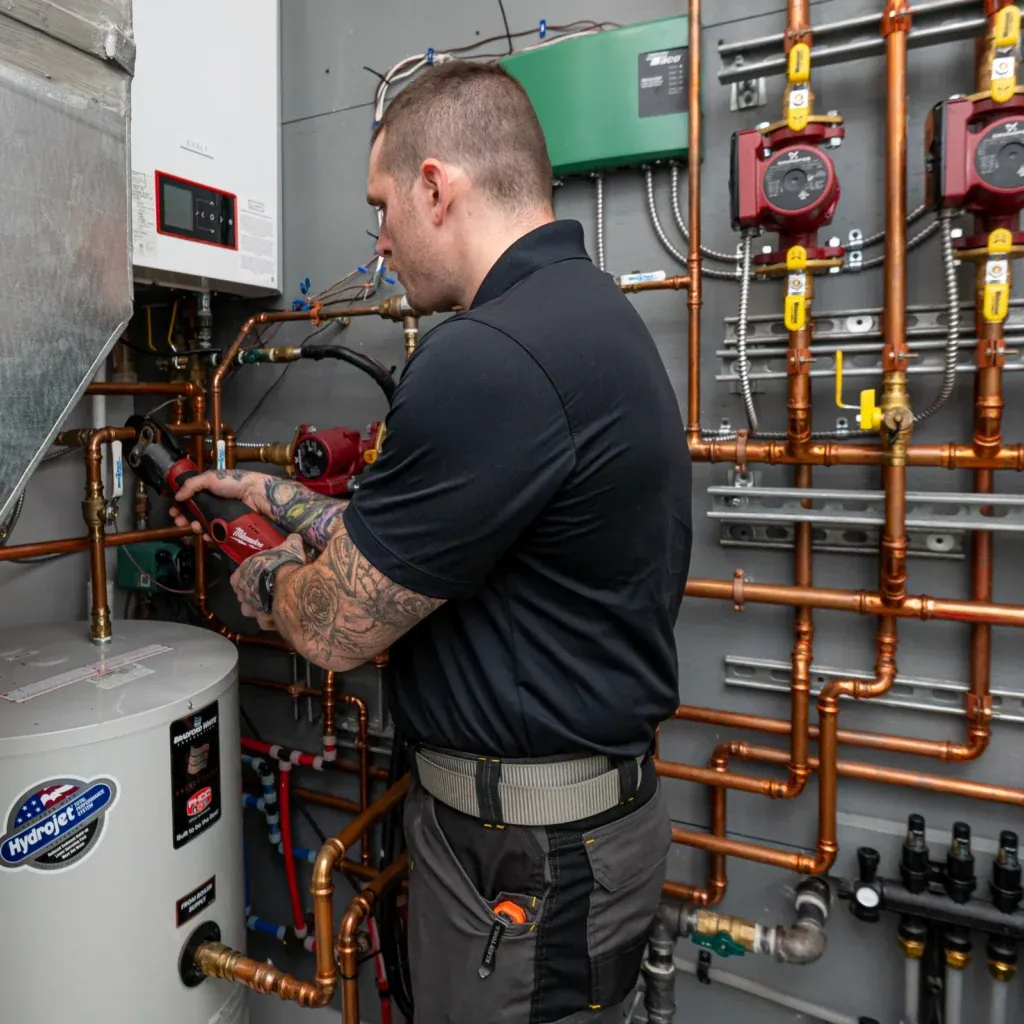
Winter in the Capital Region is hard on a house. Stretches of single-digit nights, wind off the river valleys, and the deep January cold that settles in from Albany up through Saratoga all put real stress on two systems at once: your plumbing and your heating. The two most common cold-weather calls we take are frozen pipes and a furnace or boiler that quit when the homeowner needed it most. The good news is that most of both problems are preventable with a little prep before the worst of the cold arrives, and with a few habits during the coldest stretches.
This guide walks through what an ordinary homeowner can do on a Saturday afternoon to lower the odds of a midwinter emergency. None of it requires special tools or a trade license. Where a step does call for a professional, we say so plainly. Think of this as the checklist we wish every home in the area ran through each November.
Why frozen pipes and no-heat calls spike in a Capital Region winter
Water expands as it freezes. When the water inside a pipe turns to ice, the pressure that builds between the ice plug and a closed faucet can split copper or crack a fitting — and the damage often shows up not while it is frozen, but when it thaws and starts pouring into a wall or ceiling. The pipes most at risk are the ones running through unheated or poorly insulated space: along an exterior wall, in an unfinished basement or crawlspace, in the garage, or in an attic. Outdoor hose bibs and the supply lines feeding them are classic first casualties.
Heating systems fail in winter for the simple reason that winter is when they run hardest. A furnace or boiler that limped through last season on a marginal part will often pick the coldest week to give up. Many no-heat calls trace back to small, findable things — a clogged filter choking airflow, a tripped switch, a thermostat that lost power, low water in a boiler, or a flame sensor that finally fouled out. Catching those before the cold is far easier than chasing them at 6am on a 5-degree morning.
The homeowner winter checklist
Run through these before the first hard freeze, then revisit the quick items whenever a serious cold snap is in the forecast.
1. Insulate the pipes that are exposed to the cold
Walk your basement, crawlspace, garage, and any utility areas and look for water lines running along exterior walls or through unheated space. Foam pipe sleeves from any hardware store slip right over the pipe and cost very little; for the coldest runs, a layer of insulating wrap adds protection. Pay special attention to the pipe feeding an outdoor hose bib and to any line near a draft, a vent, or a foundation gap. While you are down there, seal obvious air leaks where cold gets in — a small gap that lets a 10-degree wind blow across a copper line is often the difference between a fine winter and a burst pipe.
- Sleeve or wrap water lines in unheated basements, crawlspaces, garages, and attics.
- Disconnect, drain, and store garden hoses; shut off and drain the supply to outdoor faucets if you have an interior shutoff.
- Seal drafts and foundation gaps near exposed plumbing.
- Keep the garage door closed in cold weather if water lines run through it.
2. Let vulnerable faucets drip on the coldest nights
When the forecast calls for a deep freeze, open the faucets fed by your most exposed pipes to a slow trickle — about the width of a pencil lead. A pipe with moving water through it is far less likely to freeze solid, and even a tiny flow relieves the pressure that actually bursts pipes. Run both hot and cold so both lines stay active. Open the cabinet doors under kitchen and bathroom sinks on exterior walls so warm room air can reach the plumbing inside. This is a small overnight habit that has saved a lot of Capital Region homeowners a very expensive morning.
3. Prep your furnace or boiler before the season
Heating is the half of this most worth doing early. For a forced-air gas furnace, the single most valuable habit is changing the air filter on schedule — a clogged filter starves the system of airflow, makes it work harder, and is behind a surprising share of no-heat calls. Check that supply and return vents are open and not blocked by furniture or rugs. For a boiler, glance at the pressure gauge and look for any sign of a leak or drip around the unit; cast-iron radiators and baseboard often need to be bled of trapped air so heat moves evenly through the house.
Some of this is homeowner-friendly. The rest — checking the heat exchanger, the flame sensor, the ignition, gas pressure, and venting — is the work of a licensed technician, and it is exactly what a pre-season tune-up is for. Empire State Plumbing’s doctrine on heating is straightforward: we install and service high-efficiency natural-gas furnaces and boilers, we handle oil-to-gas conversions for homeowners ready to leave oil behind, and we service oil and propane systems for the homes that run on them. If your furnace is short-cycling, making a new noise, or putting out uneven heat, those are early warnings worth a look before the deep cold.
- Change the furnace filter; keep a few spares on hand for the season.
- Clear vents and registers of furniture, drapes, and rugs.
- Check boiler pressure and bleed radiators or baseboard of trapped air.
- Listen for new noises, short-cycling, or uneven heat — early signs of a problem.
- Book a pre-season tune-up with a licensed tech for the internal checks.
4. Set the thermostat to protect the whole house
It is tempting to drop the heat way down to save money, especially in rooms you are not using or while you are away. The trouble is that the pipes inside those cold walls do not care about your comfort budget. As a rule of thumb, keep the thermostat no lower than the mid-50s even when you are away, and never shut the heat off entirely in a Capital Region winter — an empty house with the heat off is a frozen-pipe claim waiting to happen. If you travel, leave the heat on, ask someone to check the house, and consider a smart or programmable thermostat that holds a safe minimum and can alert you if the temperature drops. Replace the thermostat batteries before the season if it uses them.
5. Test the sump pump before the spring thaw catches you
Winter is not only a pipe problem; it sets up the next one. A heavy snowpack followed by a fast thaw or a winter rain pushes a lot of water at basements across the region. Before you forget about it, pour a bucket of water into the sump pit and confirm the pump kicks on, moves the water, and shuts off cleanly. Make sure the discharge line is clear and not frozen where it exits the house, since a blocked discharge can let water back up. If your basement floods when the power goes out in a storm, a battery backup sump pump is worth asking about. A pump that has sat idle all winter is the one most likely to fail on the first big melt.
What to do if a pipe freezes or the heat goes out
If a faucet runs to a trickle or nothing on a cold morning, you may have a freeze starting. Keep that faucet open so water can flow as the ice melts, and apply gentle warmth to the frozen section — a hair dryer or a space heater kept a safe distance away, working from the faucet end back. Never use an open flame on a pipe. If a pipe has already burst, shut off the main water valve to the house right away and then call for help; knowing where that main shutoff is, before you need it, is one of the most useful things a homeowner can learn.
If the heat quits, check the easy things first: confirm the thermostat is set to heat and has power, look for a tripped breaker or a switched-off furnace switch, and make sure a fresh filter is in place. If those do not bring it back, it is time for a technician rather than guesswork around gas and electrical components.
When to call Empire State Plumbing
You do not have to wait until something fails. We are happy to handle the pre-season furnace and boiler check, sort out a sump pump that sounds tired, or take a look at the pipes you are not sure about. And when winter does land a real problem — a burst pipe, no heat, water in the basement — we keep same-day appointments open Monday through Friday across the Capital Region, dispatched from our local shop. Empire State Plumbing has been the family-run team for plumbing, heating, cooling, and drain work in this area since 2006, and we are licensed in the City of Albany under #PLBG21-147. For larger heating replacements, financing is available through Acorn Finance for those who qualify.