
Signs You Need a New Water Heater: 5 Warning Signs

By Tom Darling
Owner · City of Albany Master Plumber · Lic. #PLBG21-147
Updated
The clearest water heater replacement signs are a tank leaking from its body, hot water that runs rusty only on the hot side, a unit past a decade that keeps failing, or a heater that can no longer keep up with the household. A single failed part on a younger unit is usually a repair instead.
A water heater rarely quits without warning. It usually drops a few hints first, and catching them early can save you from a cold-shower morning or a flooded basement. At Empire State Plumbing, we help Capital Region homeowners read those signals before a slow problem turns into an emergency.
1. The Tank Is Getting Old
Age is the first thing to consider. Most standard tank water heaters are built to last somewhere in the range of a decade or so, and once a unit pushes past that, the odds of trouble climb every year. If you don’t know how old yours is, the manufacturer’s label usually has a date or a serial number that points to the build year.
An older tank that’s still working may be living on borrowed time. Knowing where yours stands helps you plan a replacement on your schedule instead of scrambling after it fails.
2. Your Hot Water Isn’t What It Used to Be
If showers turn lukewarm faster than they used to, or you’re running out of hot water sooner, the tank may be struggling to keep up. Over the years, sediment builds up at the bottom of the tank and takes up space that used to hold hot water, while also making the unit work harder to heat what’s left.
- Hot water that runs out quickly during normal use
- Water that never gets as hot as it once did
- Long waits for hot water to return after back-to-back showers
A flush sometimes helps, but on an older tank these symptoms often mean the unit is near the end of its run.
3. Rusty, Cloudy, or Smelly Water
When hot water comes out with a rusty tint, looks cloudy, or carries a metallic smell, the inside of the tank may be corroding. Rust-colored water that shows up only on the hot side is a strong hint the problem is the water heater itself rather than your pipes.
Corrosion doesn’t reverse on its own. Once the tank starts rusting from the inside, a leak is usually not far behind, and at that point replacement is the safer call.
4. Strange Noises From the Tank
Rumbling, popping, or banging sounds coming from the water heater are worth paying attention to. Those noises typically come from a layer of hardened sediment at the bottom of the tank. As the burner or element heats up, water trapped under that layer boils and crackles.
Beyond being annoying, that buildup forces the unit to run hotter and longer, which wears it out faster. If your tank has gotten loud, it’s a good time to have it looked at.
5. Leaks or Moisture Around the Base
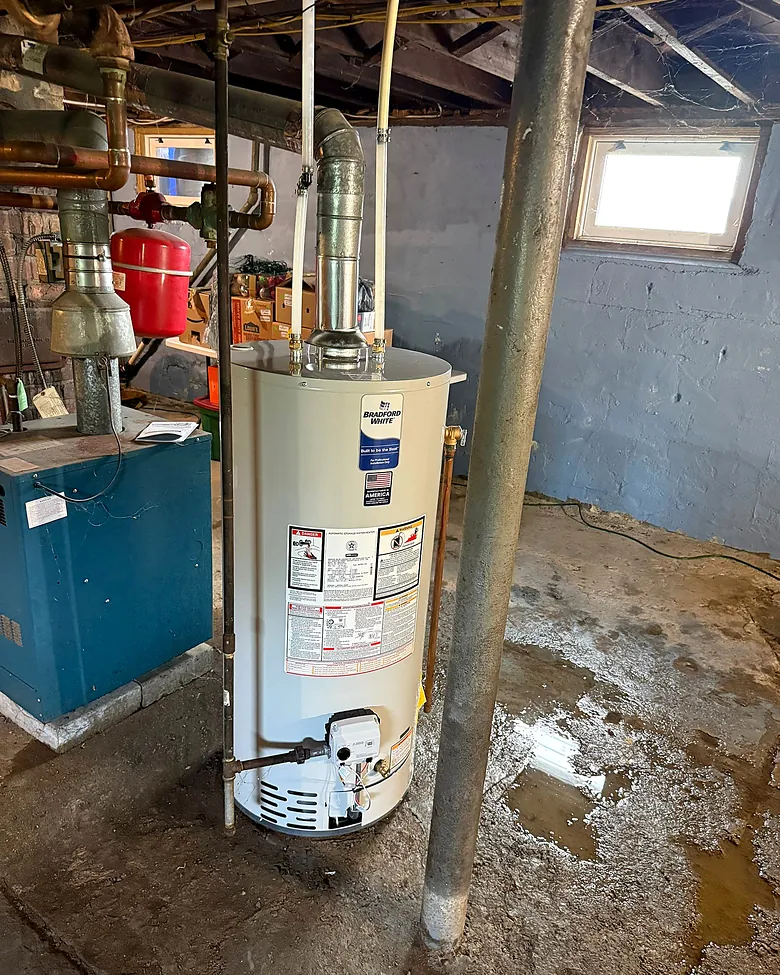
Any water pooling around the bottom of the tank is the sign you don’t want to ignore. A small drip can mean a loose fitting or a worn valve, but moisture seeping from the tank body usually points to a crack in the steel that only gets worse.
- Puddles or damp spots on the floor near the heater
- Rust or water stains on the tank or surrounding area
- A faint musty smell in the space around the unit
Because a failed tank can dump dozens of gallons at once, a leak is the clearest reason to act quickly rather than wait.
When to replace a water heater: repair or replace?
- Replace if the tank body is weeping, the inside is rusting, or a unit over ten years old keeps needing repairs.
- Repair when one component has failed and the tank itself is dry and sound: a thermostat, an element, a thermocouple, a valve or a fitting that drips.
- Ask for a diagnosis first if you are unsure. A plumber should tell you which it is and why.
For what lies behind each sign, see why water heaters fail. For a closer look at wet floors, see how to tell if your water heater is leaking, and for sediment noise see how often to flush a water heater.
When to Call a Plumber
As a family-run company serving the Capital Region, we will inspect your unit, give you a straight answer on repair versus replacement, and help you choose a unit that fits your home and budget. Financing through Acorn Finance is an option when you would rather spread the cost out. Call (518) 482-4205 or book online.
Questions homeowners ask
The main signs are water seeping through the tank body, rusty or cloudy hot water from the tank, a unit that is old and failing again, hot water that runs out far faster than it used to, and loud rumbling or popping. Any one of these on an older tank is a reason to have it looked at; the five signs above explain each.
Weeping from the tank itself, rust only in the hot water, or an old unit that keeps breaking points to replacement. A single failed part such as a thermostat, element or valve on a sound tank is usually a repair. A plumber can test the unit and tell you which applies; see water heater repair.
Tanks often last 8 to 12 years, while a tankless unit can last longer when it is maintained. Water quality, sediment and the anode rod’s condition change that. Our guide to why water heaters fail explains what shortens it.
Look at the label on the tank. It usually shows a date or a serial number that points to the year it was built, and the manufacturer can decode the serial number for you. If the label is unreadable, a plumber can often tell from the model.
Rumbling, popping or banging usually means hardened sediment at the bottom of the tank, where trapped water boils and crackles under the layer. It means the unit is working harder than it should. A flush sometimes helps, and a loud, older tank is a good time to plan for a replacement.
If the rust shows up only in the hot water, the tank may be corroding from the inside, and a leak is usually not far behind. If it also shows in the cold water, the cause may be the pipes instead. A plumber can tell which, and whether the anode rod can still protect the tank.
Related services
Call Monday–Friday, 7:30am–6pm, or book online any time.
From the blog
Keep reading
Furnace and boiler cleaning: what a fall service includes and when you need one
Furnace and boiler cleaning explained: what a yearly cleaning covers, how often to schedule it and the signs your system is overdue. Book before winter.
Keep readingHow often should I flush my water heater?
Flush a tank water heater about once a year, more often with hard or well water. Learn the signs it is overdue and the steps to flush it safely.
Keep readingTankless vs traditional water heater in Albany: how to choose
Tankless vs traditional water heater in Albany, NY: four checks on your own home (demand, gas line and venting, space, water) show which one fits.
Keep reading
Need a hand from a local pro?
Empire State Plumbing has served Capital Region homeowners since 2006 — licensed (City of Albany #PLBG21-147) and insured. Call Monday–Friday, 7:30am–6pm, or book online any time.
Real homeowners
What Capital Region homeowners say
Verified Google reviews from Capital Region homeowners.
