Gas vs Electric Water Heater: Which Should You Buy?

By Tom Darling
Owner · City of Albany Master Plumber · Lic. #PLBG21-147
Updated
Choose gas if you already have a natural gas or propane line to the house and a good vent path: gas tanks recover faster, and a standing-pilot, atmospheric-vent gas tank keeps heating in a power outage. Choose electric if the home is all-electric, or if a gas line and vent would be costly: electric is simpler to install and fits more spaces. What each costs to run depends on your local gas and electric rates, so compare both for your home.
Replacing a water heater is one of those home decisions you only make every decade or so, which is exactly why it’s easy to feel stuck on gas versus electric. At Empire State Plumbing, we help Capital Region homeowners weigh both options based on what’s actually in their home, not a one-size-fits-all answer.
The Short Answer: It Depends on Your Home
The best choice usually comes down to what fuel you already have running to the house and how much hot water your household burns through. Both gas and electric tank water heaters do the same job well. The differences show up in upfront cost, how fast they reheat, and what your home is set up to support.
- If you already have a natural gas, propane, or oil line feeding your furnace or boiler, gas is often the practical pick.
- If your home is all-electric or gas access would require expensive new lines and venting, an electric unit can be the simpler, cleaner install.
How Gas Water Heaters Stack Up
Gas water heaters heat water quickly and tend to recover faster, meaning they refill with hot water sooner after a big draw. For larger households or homes where back-to-back showers are the norm, that faster recovery is a real day-to-day benefit.
The trade-offs to keep in mind:
- Gas units need proper venting to carry combustion gases safely outside, which affects where they can be placed.
- Installation can be more involved, especially if a gas line or vent isn’t already in place.
- They’ll keep making hot water during a power outage, since the burner doesn’t rely on household electricity the way an electric unit does.
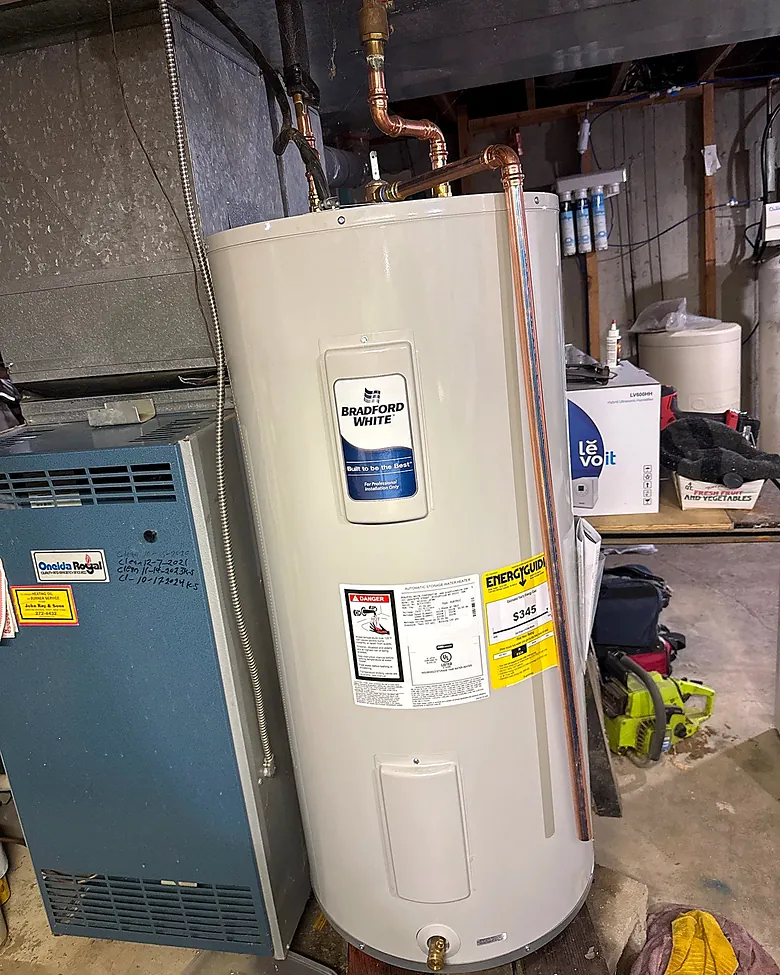
How Electric Water Heaters Stack Up
Electric water heaters are generally simpler to install because there’s no venting or gas line to deal with. They have fewer parts that can go wrong with combustion, and they fit into a wider range of spots around the house, including tighter closets and interior rooms.
What to weigh on the electric side:
- Recovery time is usually slower than gas, so a very busy household may notice it during peak demand.
- If your home isn’t already wired for the right circuit, you may need an electrician to run the proper line.
- Operating cost depends on local electric rates versus fuel prices, which is worth checking for your situation.
Recovery time: gas vs electric
Recovery time is how quickly a tank heats a fresh supply of water after you use it. A gas tank usually recovers faster than an electric tank of the same size, which matters for a larger household or back-to-back showers. An electric tank can still serve a busy home when it is sized to the household.
Which costs less to run?
There is no single answer, because running cost follows your local gas and electric rates and how much hot water you use. Compare the rated efficiency of the exact models and your own rates, not the fuel alone. Our water heater replacement cost guide covers what changes the price of the install.
Does a gas water heater work without electricity?
A gas tank with a standing pilot or a self-powered control keeps heating during a power outage. A power-vent gas heater, and some tankless gas units, use electricity for the blower and controls, so they will not heat water in an outage. See what is a power-vent water heater.
What Matters Most for Capital Region Homes
Around the Capital Region, a lot of homes already run on gas, oil, or propane for heating, which makes a gas water heater a natural fit. But every house is different. Older homes sometimes have venting or clearance limits that push the decision toward electric, and all-electric homes are often best served by staying electric.
A few things we always check before recommending one over the other:
- What fuel and capacity your current setup already supports
- How many people are in the home and your typical hot-water demand
- Available space, venting, and clearance where the unit will live
- Whether new gas, venting, or electrical work would be needed
Get a Straight Recommendation
The right water heater is the one that matches your home and your household, and that’s a lot easier to sort out with a plumber who has actually looked at your setup. As a family-run company serving the Capital Region since 2006, we’re happy to walk you through gas versus electric and help you pick what fits. Financing is available through Acorn Finance if you’d like to spread out the cost.
Call Empire State Plumbing at (518) 482-4205 or book online to talk through the right unit for your home.
Questions homeowners ask
Some do and some do not. A gas water heater burns natural gas or propane to heat the water. An electric one uses electric heating elements. Check the label on the unit to see which you have.
It depends on local gas and electric rates and on how much hot water you use. Compare the rated efficiency of the exact models, not the fuel alone. Our cost guide covers what changes the price of the install.
Neither is better in every home. Gas heats and recovers faster and keeps working in an outage, but it needs a gas line and a vent. Electric is simpler to install and fits more spaces, and it can recover more slowly. The fuel already at your house and your hot water use usually decide it.
It depends on the tank size, the power of the heating elements and how much hot water you used. As a rule an electric tank recovers more slowly than a gas tank of the same size, so a busy household may notice it at peak demand. The unit’s first-hour rating tells you more than the fuel alone.
Flush the tank on the schedule in the manual, have the anode rod and relief valve checked, and watch for rumbling, rusty water or a breaker that keeps tripping. Leave wiring, elements and thermostats to a professional. The details are in our flushing guide, how often to flush a water heater.
It is a third, electric option. Heat pump models use less electricity than a conventional electric tank, but they need space, a condensate drain and suitable electrical service, and they cost more to buy. The right choice depends on the home; see water heater efficiency tips for what to look for.
Related services
Call Monday–Friday, 7:30am–6pm, or book online any time.
From the blog
Keep reading
Pool heater service in the Capital Region: keep the pool warm longer
Keep your pool warm into fall with professional pool heater installation and repair. Swim longer this season; book online or call (518) 482-4205.
Keep readingSigns you need a new water heater: 5 warning signs
Rusty hot water, a leaking tank, rumbling noises, a unit past a decade or hot water that runs out fast: the 5 signs you need a new water heater.
Keep readingFurnace and boiler cleaning: what a fall service includes and when you need one
Furnace and boiler cleaning explained: what a yearly cleaning covers, how often to schedule it and the signs your system is overdue. Book before winter.
Keep reading
Need a hand from a local pro?
Empire State Plumbing has served Capital Region homeowners since 2006 — licensed (City of Albany #PLBG21-147) and insured. Call Monday–Friday, 7:30am–6pm, or book online any time.
Real homeowners
What Capital Region homeowners say
Verified Google reviews from Capital Region homeowners.