
Standard Tank Water Heater Benefits: 5 Reasons to Stay With a Tank

By Tom Darling
Owner · City of Albany Master Plumber · Lic. #PLBG21-147
Updated
Why choose a tank water heater? The main benefits of a standard tank water heater are a lower upfront cost, a simpler like-for-like installation, steady performance when several fixtures run at once, easy and inexpensive repairs, and a long, proven record. For many Capital Region homes replacing an existing tank, that adds up to the more practical choice.
Tankless water heaters get most of the attention these days, but for a lot of Capital Region homes, a standard tank model is still the smarter, more practical choice. As a family-run team that has been working in homes across the region since 2006, we install plenty of both — and here is why the tried-and-true tank often wins.
1. Lower Upfront Cost to Get Hot Water Back
A standard tank is the lower-priced unit to buy, and it installs without the extras many tankless conversions need: no gas line upsize, no new venting, no electrical upgrade. That means a cleaner, simpler swap, and we offer same-day service within business hours when the schedule allows.
2. Simpler Installation in Older Homes
The Capital Region has a lot of older housing stock, and that matters when you replace a water heater. Tank units are designed to drop into the same footprint your last one used, which keeps the work straightforward in tight basements, closets, and crawl spaces.
- They reuse your existing water and gas connections in most cases.
- They do not demand the larger gas supply a high-output tankless unit may need.
- They avoid the new stainless venting runs that conversions often require.
Fewer modifications means fewer surprises behind the walls — and a more predictable job for you.
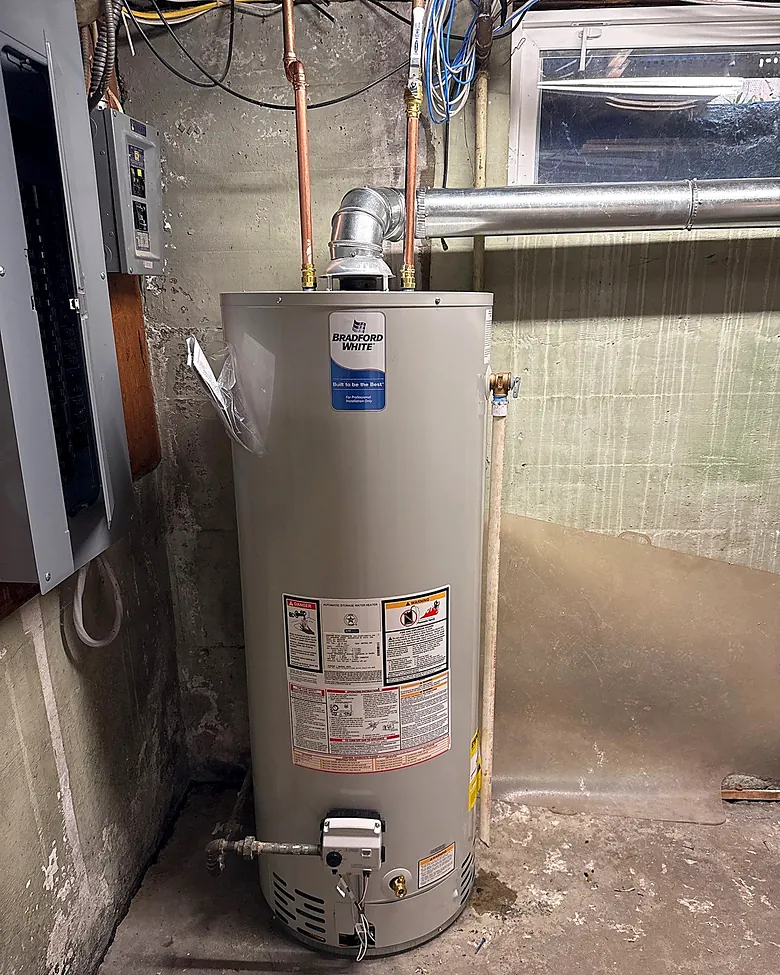
3. Reliable Performance When Several Fixtures Run at Once
A tank stores a ready reserve of hot water, so it does not care whether you are filling a tub, running the dishwasher, or starting a load of laundry. It simply delivers what is already heated. For busy households that tend to use hot water in bursts at the same time of day, that stored capacity is genuinely convenient. You size the tank to match how your family actually lives, and it does the rest.
4. Easy, Inexpensive Repairs and Parts
Tank water heaters have been the standard for decades, which means parts are common and repairs are usually simple. A worn thermocouple, a failed heating element, a tired anode rod, or a leaking valve are all familiar fixes. Because the technology is mature, you are not waiting on specialty components or paying a premium for them. When something does need attention, getting your hot water restored tends to be quick and budget-friendly.
5. A Proven, Low-Hassle Track Record
There is real value in equipment that homeowners and plumbers have trusted for generations. A standard tank water heater is easy to understand, easy to service, and forgiving of the hard-water and seasonal swings we see across the region. A little routine maintenance — flushing sediment and checking the anode rod — goes a long way toward a long, dependable service life.
Tank vs tankless: when a tank is not the best fit
A tank can fall short when the household keeps running out of hot water, when the closet or basement space is needed for something else, or when you want hot water on demand. In those cases, price a tankless unit as well. Our standard vs tankless water heater guide sets the two side by side, and tankless vs traditional water heater in Albany covers the checks to make in your own home.
How long does a standard tank water heater last?
Tank water heaters often last 8 to 12 years. Sediment, the condition of the anode rod and your water quality shape where a given unit lands in that range. Flushing the tank and having the anode rod checked are the routine steps that help; see how often to flush a water heater and why water heaters fail.
None of this means tankless is wrong; for some homes it is a great fit. The point is that you deserve an honest recommendation based on your house, your hot-water habits, and your budget — not the trend of the moment. Financing is available through Acorn Finance if you want to spread out the cost. If your water heater is acting up or you are weighing your options, call Empire State Plumbing at (518) 482-4205 or book online, and we will help you choose the right setup for your home.
Questions homeowners ask
A tank water heater is usually cheaper to buy and install, mainly because it reuses the existing gas, water and vent connections. A tankless unit often needs a gas line, venting or electrical upgrade. Running cost depends on your fuel rates and how much hot water you use, so compare quotes for both.
Tank water heaters often last 8 to 12 years. Sediment, the anode rod and your water quality shape where a unit lands in that range. A tank that is flushed and has its anode rod checked tends to reach the long end of it.
Size follows the household: how many people live there, how many bathrooms and appliances draw hot water at the same time, and the first-hour rating of the unit. A tank that is too small runs out, and one that is too large costs more to keep hot. We size the replacement to how your household uses hot water.
A tank keeps its water hot all day, so it loses some heat even when nobody is using it, which is called standby loss. A tankless unit avoids that loss. How much it matters depends on your fuel rates, your usage and the installed system, so compare the rated efficiency of the exact models.
Related services
Call Monday–Friday, 7:30am–6pm, or book online any time.
From the blog
Keep reading
Water softener guide: what it does, how it works and if you need one
Water softener guide: what a softener does, how ion exchange works, signs of hard water, how to size one and keep it running. Plus when you need one.
Keep readingHow to check your sump pump before spring
How to check your sump pump before spring: a bucket test, pit cleaning, discharge line check and a maintenance checklist to avoid a flooded basement.
Keep readingLow water pressure: causes and how to fix it
Low water pressure causes, from clogged aerators and valves to a bad regulator, a leak or a well pump, with simple checks and when to call a plumber.
Keep reading
Need a hand from a local pro?
Empire State Plumbing has served Capital Region homeowners since 2006 — licensed (City of Albany #PLBG21-147) and insured. Call Monday–Friday, 7:30am–6pm, or book online any time.
Real homeowners
What Capital Region homeowners say
Verified Google reviews from Capital Region homeowners.
