Most standard tank water heater replacements in the Capital Region cost $2,900 to $3,900 installed. Specialty installs — power-vent units, tight or unusual locations, oil- and propane-served homes — typically run $4,500 to $6,000, and tankless systems range from about $6,800 to $14,800 depending on the unit and what your home’s gas and venting can support. Those aren’t national averages: they’re what Empire State Plumbing customers actually paid on completed jobs over the past 14 months. This guide breaks down what moves the number, when a repair still makes sense, and how our flat, upfront pricing works.
What a Water Heater Replacement Costs Here
From our own recent invoices across the Capital Region:
- Standard tank replacement (40–50 gallon, gas or electric): $2,900–$3,900 installed, including removal of the old unit.
- Specialty tank installs (power-vent models, larger tanks, difficult access, code corrections): $4,500–$6,000.
- Tankless (on-demand) systems: $6,800–$14,800 installed, with the higher end covering whole-home units that need gas line or venting upgrades.
Every job is quoted as one flat price before work begins — the number we give you is the number on the invoice.
What Moves the Number
Two houses on the same street can land at different points in those ranges. The usual reasons:
- Unit type and size. A like-for-like 40-gallon swap is the baseline. Stepping up in capacity, or to a higher-recovery or higher-efficiency model, moves the equipment cost.
- Venting. Homes without a standard chimney draft — common in oil- and propane-served towns like Nassau and Schodack — need power-vent units that push exhaust out a side wall. The unit itself costs more, which is a big part of the specialty range.
- Code items. New York code can require an expansion tank, drain pan, updated shutoff valves, or permit work that the original installation never had. Older Albany and Troy homes see this most.
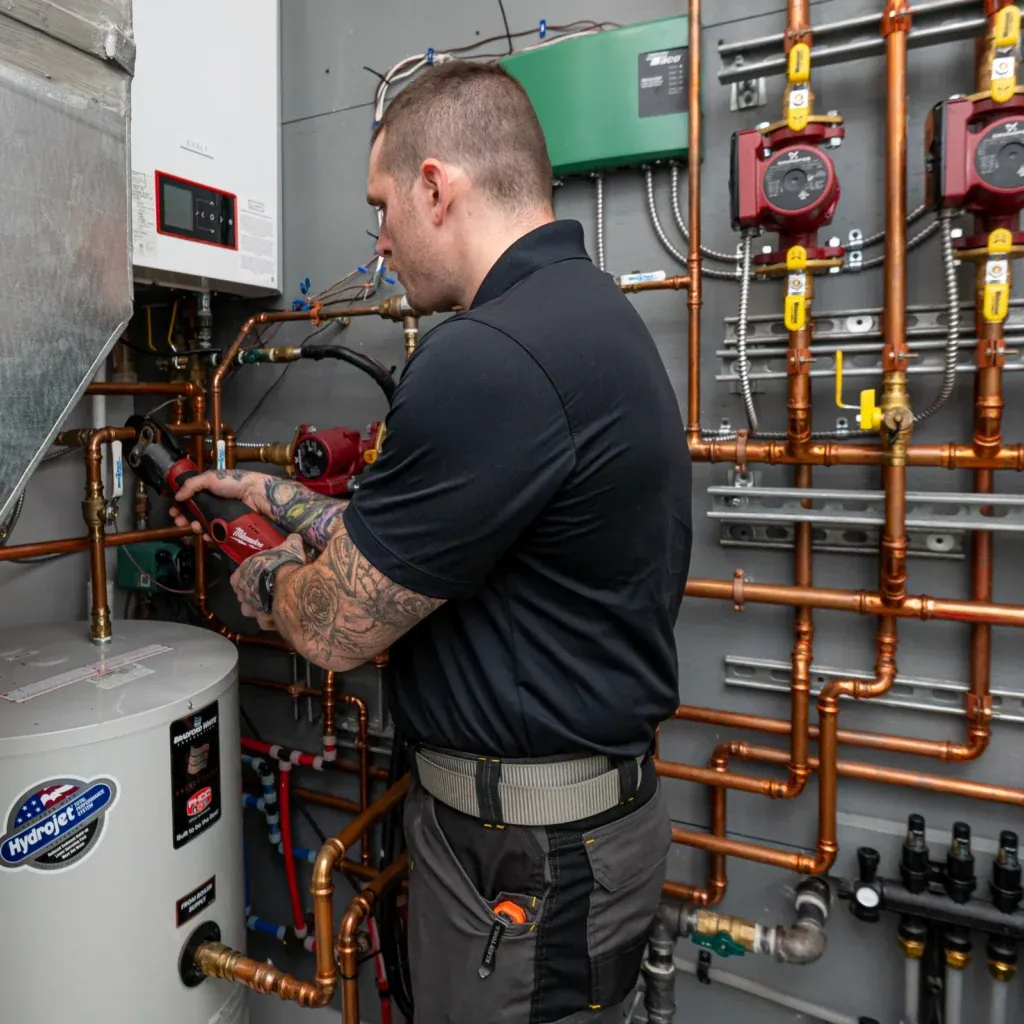
- Access and location. A heater in an open basement is a straightforward swap; one wedged in a finished closet or crawlspace takes more labor.
- Fuel changes. Switching fuel type (electric to gas, oil to propane) adds line and venting work beyond a standard replacement.
Tank vs. Tankless: The Cost Math
A tankless unit costs roughly two to four times as much installed, but it typically lasts 15–20 years versus 8–12 for a tank, never runs out of hot water, and wastes less energy keeping a reservoir hot. Whether that math works for your household depends on how you use hot water and what your gas service can support — our water heater buying guide walks through the decision in plain English, and this tank vs. tankless comparison covers the trade-offs in more depth.
Repair or Replace?
Not every failing water heater needs replacing. A bad thermostat, heating element, or gas valve on a unit under 8 years old is usually worth repairing. The replacement conversation starts when the unit is past 8–10 years and the repair bill climbs toward a meaningful fraction of a new install — and one situation skips the conversation entirely: a leaking tank can’t be repaired. Water at the base of the tank means corrosion has won, and the priority becomes replacing it before it lets go into your basement.
How We Price It: Flat and Upfront
We diagnose first, then quote the full job as a single flat price — equipment, labor, code items, permits, and haul-away — before any work starts. We also run flat-fee diagnostic specials regularly; check the current specials before you book. If the quote doesn’t make sense for you, you’ve spent a diagnostic fee and you know exactly where you stand.
Financing a Replacement
A water heater rarely fails on payday. Qualified buyers can spread the cost through our financing partners, Acorn Finance and Service Finance — details and applications are on our financing page. Most approvals happen fast enough that financing doesn’t delay a same-day swap.
Where These Numbers Come From
Every figure on this page comes from real Empire State Plumbing invoices for water heater work completed between May 2025 and July 2026 across our Capital Region service area — not from national cost databases, which routinely miss what Northeast code work and cold-climate equipment actually cost. Prices shown are ranges; your quote is a flat, exact number for your home.